
Analysis of major international affairs
Tribute to Professor Henry Kissinger Master of Realpolitik
Henry Kissinger: a century-long history
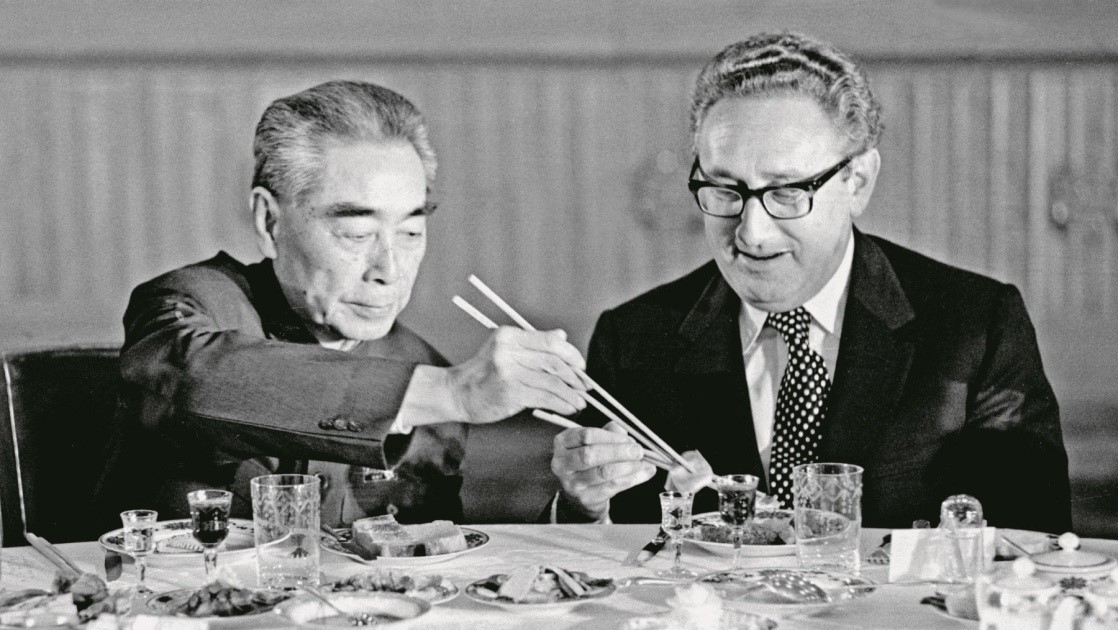
Many lives in one. Henry Kissinger’s is the story of the twentieth century. He is particularly remembered for his famous ping-pong diplomacy in 1972. American and Chinese teams prepared for Kissinger and President Nixon’s trip to China initiating dialogue between the United States and the People’s Republic of China.
Henry Kissinger’s heyday was first as National Security Advisor and then as Secretary of State and in these two positions showed how deep was his conviction of the role of Realpolitik that sees how things really are, without ideology and sentimentalism. He was among the few who understood the urgency of getting America out of the war in Vietnam, establishing diplomatic relations with China and reducing tensions with the Soviet Union.
He was convinced that a balance of forces could never completely satisfy every member of the international system, but it is satisfying if it maintains the dissatisfaction of various members below the level that might induce some of them to try to subvert the international order.
The two major international players, China, and the Soviet Union, were his principal interlocutors. He understood well in advance that the European Union would be a weak and fragmented political body, as it has shown itself to be, with a very limited international role. An unprecedented organization in human history with many doubts about its duration. Weak because there was and is no true parity among the states due to the tendency of Germany and France to dominate; weak because it has become a bureaucratic monster; weak because too influenced by the lobbies of the multinationals corporations.
Kissinger had always seen the importance of China, a country of millenary culture, an emerging economic and military power, with a strong continuity of thinking in its leadership. On the other hand, Russia post-communist represents a great mystery. First Yeltsin’s coming to power, an absolute change and a break with the historical past of that country. Then for the paradigm shift with Putin. And also because of the nebulous role of current numerous Russian politicians.
Considering that a new Cold War is now under way although no longer on ideological basis as in the past, will a new dialogue between Russia and the West be possible, or has the war in Ukraine created distrust for several years to come? Russia has sought a new partnership with China establishing an anti-Western bloc, but Putin knows that Russia is the minority partner. The West has not fully understood what it means to alienate a great country with which it has many cultural and religious ties and has urged it towards China which has a profoundly different culture from the western one.
The future of the world will depend on the quality of the political classes. The typical politician is very short-sighted, takes care of his own interests, and bows to the influence of lobbies. The statesman is capable of looking intelligently at the long term, takes care of relations with other countries and promotes the prosperity of his people. The future will depend on whether there will be statesmen with intellectual abilities or whether the mediocre will dominate.